


The living room landscape is undergoing a radical shift as we head into the new year. Homeowners are no longer satisfied with simple TV stands or basic wall mounts; they are seeking integrated architectural solutions that define the aesthetic of their entire home. The latest Media Wall Trends emphasize a seamless blend of high-end technology and bespoke craftsmanship. From hidden cabling to integrated climate-controlled storage, the focus has shifted toward creating a multi-sensory experience that anchors the modern living space.
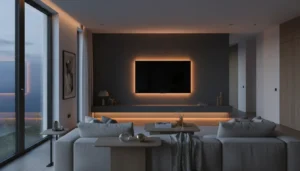
In 2026, the heavy, floor-to-ceiling structures of the past are giving way to “floating” designs. By suspending the main cabinetry and TV housing off the floor, designers create an illusion of expansive floor space. This trend is particularly effective in smaller urban apartments where visual clutter can feel overwhelming. These floating units often feature integrated LED strip lighting at the base, casting a soft glow that makes the entire installation appear weightless during evening hours.
(Discover more about maximizing small spaces in our latest article: [Small Room Media Wall Optimization Strategies].)
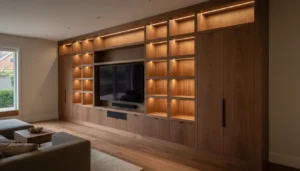
We are seeing a departure from monochromatic painted MDF toward rich, tactile materials. The most prominent Media Wall Trends involve mixing natural wood slats with industrial elements like polished concrete or fluted marble. This juxtaposition creates a sophisticated focal point that works across various interior styles, from Scandi-minimalism to industrial chic. The inclusion of 3D wall panels adds a layer of depth that changes throughout the day as natural light hits the different surfaces.
The synergy between entertainment and warmth continues to dominate the market. However, the 2026 approach focuses on ultra-realistic “water vapor” flames or high-definition holographic fire effects. These units are safer for surrounding electronics and allow for more creative placement of the television. Instead of the traditional “stacked” look, designers are now opting for offset layouts where the fireplace sits to the side of the screen, creating a more balanced and artistic asymmetrical composition.
| Material Choice | Durability Rating | Maintenance Level | Designer’s Value-Add Note |
| Slat Wood (Oak) | High | Medium | Ensure 10mm spacing between slats to allow for natural expansion and acoustic dampening. |
| Venetian Plaster | Very High | Low | Apply a wax finish to prevent fingerprint staining around high-touch hidden cupboard seams. |
| Fluted Marble | Extreme | Medium | Use reinforced steel brackets for wall-mounted sections to prevent structural sagging over time. |
Home cinema quality is being built directly into the furniture. Many current Media Wall Trends prioritize “acoustic fabric” panels that hide bulky speakers without muffling the sound. These panels are often color-matched to the cabinetry, ensuring that the technology remains invisible until the system is turned on. By integrating soundbars and subwoofers into dedicated, vented compartments, homeowners achieve a clean look while maintaining 2.1 or 5.1 surround sound fidelity.
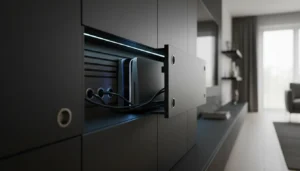
As gaming becomes a central part of family life, the media wall is evolving to accommodate consoles and high-end PCs. Modern designs include specialized ventilation systems with silent fans to prevent overheating. Cable management has also reached a professional level, with internal routing channels that allow for easy swapping of hardware. This shift ensures that the media wall is a versatile hub for movies, gaming, and even professional video conferencing.
While whites and greys remain popular, 2026 is seeing a surge in “jewel tones” and “earthy depths.” Deep forest greens, navy blues, and terracotta are being used to make the media wall a true statement piece. These colors provide a high-contrast backdrop for the TV screen, which can actually improve the perceived black levels of the display. When paired with brass or copper hardware, these bold colors elevate the installation to a luxury furniture grade.
Storage is no longer just about hiding clutter; it is about accessibility and organization. New Media Wall Trends introduce “touch-to-open” seamless doors that blend perfectly with the wall panels. Inside, custom inserts for vinyl records, media collections, and smart home hubs are standard. This organized approach ensures that the “zero-clutter” philosophy is maintained both inside and outside the cabinetry, reflecting a more disciplined approach to home design.
(For deeper insights into this, read our comprehensive guide on [Hidden Storage Solutions for Modern Living Rooms].)
Lighting has evolved from a decorative afterthought to a core functional component. Modern media walls utilize smart lighting that syncs with the content on the screen, expanding the visual field of the movie or game. Furthermore, task lighting is being integrated into shelving units to highlight art pieces or books. The use of high-CRI (Color Rendering Index) LEDs ensures that the colors of the media wall materials look as natural at night as they do during the day.
| Component | Standard Depth | Load Capacity | Designer’s Value-Add Note |
| TV Niche | 150mm – 200mm | 50kg+ | Allow a 50mm clearance on all sides of the screen for future-proofing against larger TV models. |
| Lower Cabinets | 450mm – 500mm | 100kg | Use heavy-duty soft-close hinges to prevent vibrations from subwoofers causing door rattles. |
| Open Shelving | 250mm – 300mm | 15kg | Opt for tempered glass shelves with rear-inset LED strips for a shadow-free display of decor. |
Eco-friendly materials are becoming a non-negotiable part of the design process. Many Media Wall Trends now feature FSC-certified timber and recycled composite materials. Low-VOC (Volatile Organic Compound) finishes are also preferred to ensure air quality remains high within the home. This focus on sustainability does not compromise luxury; rather, it adds a story of craftsmanship and responsibility to the installation, making it a “guilt-free” upgrade for the modern homeowner.
You must start by measuring your primary viewing device and adding at least 10% extra space for ventilation and future upgrades. Consider the total width of your wall and ensure the unit occupies approximately two-thirds of that space for visual balance. This prevents the room from feeling cramped while ensuring the TV remains the central focus.
Most designs require very little maintenance if high-quality materials are used during the initial construction phase. You should wipe down surfaces with a microfiber cloth and ensure that internal ventilation fans are clear of dust every 6 months. Choosing matte finishes over high-gloss can significantly reduce the visibility of fingerprints and daily wear.
While permanent structures are usually restricted, many Media Wall Trends now include modular or “free-standing” units that can be disassembled. These systems provide the look of a built-in installation without requiring structural changes to the property. Always check your lease agreement before opting for a wall-mounted version that requires heavy-duty drilling or electrical modifications.
The future of home entertainment is clearly centered on integration and personalization. As Media Wall Trends continue to evolve, the focus remains on creating a space that is as functional as it is beautiful. Whether you prioritize acoustic perfection, gaming performance, or pure aesthetic luxury, the media wall serves as the definitive heart of the 2026 home. By investing in quality materials and smart design, you ensure that your living space remains ahead of the curve for years to come.


