


The modern living room has evolved significantly, shifting from cluttered entertainment centers to streamlined, integrated hubs. In 2026, the trend of Simple Media Wall Designs has become the ultimate solution for urban dwellers facing the challenge of limited square footage. A well-executed media wall does more than just hold your TV; it defines the room’s architecture while maximizing floor space. By blending cabinetry, lighting, and minimalist aesthetics, you can transform a cramped wall into a sophisticated focal point that feels expansive rather than intrusive.
Whether you are working with a narrow studio apartment or a cozy suburban lounge, the key lies in choosing a design that balances functionality with visual lightness. This guide explores ten innovative concepts tailored specifically for compact environments, ensuring your home remains stylish and clutter-free.
The primary rule for small spaces is to keep the floor visible. A floating media wall uses wall-mounted cabinetry to create an illusion of more area. By eliminating the “legs” of traditional furniture, the eye travels all the way to the wall base, making the room feel significantly larger. In 2026, we see a rise in ultra-slim profiles that house soundbars and gaming consoles without the bulk.
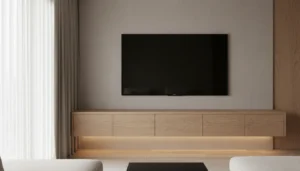
Texture plays a vital role in simple media wall designs when color palettes are kept neutral. Vertical wood slats provide a rhythmic, architectural feel that draws the eye upward, emphasizing ceiling height. This verticality is a classic designer trick to combat the feeling of a “boxy” room. Choose light woods like ash or bleached oak to keep the atmosphere airy.
(Discover more about maximizing vertical storage in our latest article: [Creative Vertical Shelving Strategies for Apartments].)
| Design Element | Recommended Depth | Designer’s Value-Add Note |
| Floating Shelf | 25cm – 30cm | Ensure the shelf is mounted at a height that allows for easy vacuuming underneath to maintain the airy feel. |
| Recessed TV Niche | 10cm – 15cm | Use a “future-proof” niche size that allows for at least 5cm of ventilation space around the screen edges. |
| Slatted Panels | 1.5cm – 2cm | Opt for felt-backed acoustic slats to improve sound quality in small rooms with hard flooring. |
If your small space features awkward alcoves or chimney breasts, don’t fight them—utilize them. Recessing your television and shelving into these existing architectural features creates a flush finish. This approach to simple media wall designs ensures that no furniture protrudes into the walking path, which is essential for maintaining “flow” in high-traffic zones.
Color drenching—painting the media wall the exact same shade as the surrounding walls—is a powerful tool for 2026. When the cabinetry and the wall share a single hue, the boundaries of the unit disappear. This “invisible” cabinetry provides ample storage for media players and wires without adding visual noise to the room.
Mirrors are a timeless hack for small areas, and they integrate beautifully into modern entertainment hubs. By adding mirrored panels to the sides of a central TV unit, you reflect light back into the room. This makes simple media wall designs work twice as hard by acting as both a media center and a light-enhancing feature.
For those who prefer a more “raw” aesthetic, slim metal frames provide structural integrity without the weight of solid wood. These skeletal simple media wall designs allow the wallpaper or paint behind the unit to remain visible, preventing the furniture from feeling like a heavy “block” in the corner of the room.
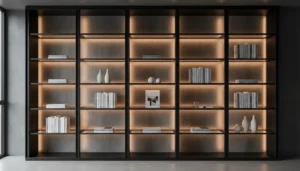
In 2026, the “fire and ice” look—combining a digital screen with a linear electric fireplace—remains a top request. For small spaces, the key is using a “hole-in-the-wall” fire model that requires zero floor clearance. These simple media wall designs provide a cozy ambiance and a secondary heat source without the need for a bulky mantelpiece.
(For deeper insights into this, read our comprehensive guide on [Safety Clearances for Integrated Fireplace Media Walls].)
When wall space is at a premium, the corner becomes your best friend. Modern corner media walls have moved away from the old-fashioned “wedge” units. Instead, they use wrap-around shelving that utilizes two walls, providing a panoramic display area that turns a dead corner into a functional masterpiece of simple media wall designs.
| Material Type | Durability | Designer’s Value-Add Note |
| Matte Laminate | High | Choose “anti-fingerprint” finishes to reduce maintenance in rooms with heavy sunlight exposure. |
| Natural Veneer | Medium | Match the grain direction across all cabinet doors to create a continuous, calming visual line. |
| Toughened Glass | High | Use smoked or tinted glass for cabinet doors to hide messy tech components while still allowing IR remotes to work. |
Minimalism is about what you don’t see. Advanced simple media wall designs now feature sliding panels or “pocket doors” that can completely hide the TV when it is not in use. This is particularly effective in multi-purpose rooms where you want the space to feel like a formal sitting room during the day and a cinema at night.
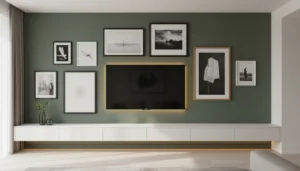
If you find a large black screen distracting in a small room, surround it with art. By incorporating the TV into a larger grid of framed photos and paintings, the screen becomes just another element of the decor. This strategy ensures simple media wall designs feel personal and curated rather than purely functional.
A standard media wall typically requires a depth of 15cm to 35cm. For small spaces, we recommend staying closer to the 20cm mark by using ultra-slim wall mounts and recessed electric fires. This ensures the unit provides a sleek silhouette without infringing on your valuable floor area or obstructing walkways.
Yes, it is entirely possible to build these structures on a stud wall, provided you locate the timber studs for support. For heavier setups including large TVs and soundbars, professional installers often reinforce the internal framework with additional plywood “pattressing” to ensure the structure can safely handle the weight of your equipment.
The most effective way to hide cables is by installing a dedicated “brush plate” or conduit behind the wall surface. This allows wires to run internally from the TV down to the power sockets. Modern designs also utilize “gravity-fed” cable management systems within the cabinetry to keep everything organized and easily accessible for future tech upgrades.
Creating a high-impact entertainment zone doesn’t require a sprawling mansion. Through the clever application of simple media wall designs, even the most modest apartment can boast a feature that is both luxurious and practical. By focusing on floating elements, integrated lighting, and smart material choices, you can achieve a look that is perfectly aligned with 2026 interior trends. Remember that in a small space, every centimeter counts, so prioritize designs that offer hidden storage and clean, unobstructed lines.

