


The concept of the living room has evolved significantly over the last decade. The television is no longer just a box in the corner; it is the central hub of entertainment and relaxation. Consequently, homeowners are increasingly seeking innovative media wall ideas to create a stunning focal point in their lounge or bedroom. A well-designed wall does more than house your technology; it integrates storage, heating, and lighting into one seamless architectural feature.
In the UK, the trend has shifted from standard TV stands to sophisticated, built-in structures. Whether you reside in a compact city apartment or a spacious detached house, there is a design solution available. This guide explores the most effective styles, technical considerations, and installation advice to help you elevate your home interior.
The popularity of the media wall UK market has surged due to the demand for clean lines and clutter-free living. Modern homes often feature open-plan layouts where a feature wall with TV serves as an anchor for the room. It zones the space effectively, separating the relaxation area from the dining or kitchen sections.
A bespoke media wall offers a level of customisation that off-the-shelf furniture cannot match. You can tailor the depth, width, and finish to suit your specific dimensions. This approach ensures that unsightly cables are hidden, and devices like soundbars or games consoles are neatly tucked away yet remain accessible.
(For deeper insights into this, read our comprehensive guide on Maximising Space in Open-Plan Living.)
Finding the right inspiration is the first step. When browsing media wall ideas, it is essential to consider the architecture of your room. A minimalist media wall works wonders in contemporary builds, while a design incorporating wood slats or alcoves might suit a period property better.
There are countless ways to configure your setup. The choices range from simple stud wall constructions to elaborate joinery projects. Here are some of the most sought-after styles currently dominating the market.
For a small living room media wall, less is often more. A floating design, where the structure does not touch the floor, creates an illusion of more floor space. These setups usually frame the TV with hidden LED strips to provide a soft glow.
This style focuses on the “floating” aspect of the television and perhaps a soundbar media wall integration. It is sleek, affordable, and quick to install. The focus here remains strictly on the screen, making it one of the most practical media wall ideas for compact urban homes.
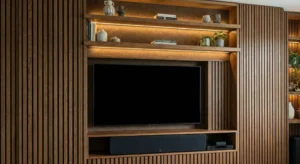
A media wall with storage is the perfect answer for families. By incorporating cupboards, drawers, and shelving, you can hide toys, remotes, and accessories. A media wall with shelving also allows you to display decorative items, breaking up the solidity of the large screen.
Bespoke media walls UK installers often recommend a mix of open and closed storage. This balance prevents the wall from looking too heavy. Using materials like oak or walnut for the shelves adds warmth and texture to the design.
If you have the space, a luxury media wall UK design can replicate a cinema feel. This often involves a media wall for 85 inch TV or larger, flanked by high-end acoustic panels.
These designs prioritise audio-visual performance. They often include specific recesses for subwoofers and surround sound speakers. When looking for media wall ideas that impress, a full cinema integration is the pinnacle of modern luxury.
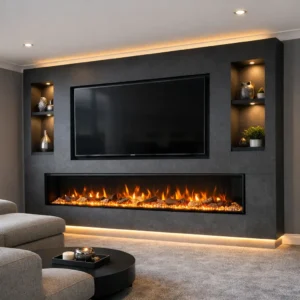
One of the most popular requests is a media wall with fireplace. The combination of technology and the primal comfort of a fire creates an unbeatable atmosphere. However, the type of fire you choose dictates the construction method.
The built-in electric fireplace wall is the standard for these installations. Modern electric fires allow you to control the heat and the flame effect independently. You can enjoy the visual of a media wall with LED fireplace UK style even in the summer without the heat output.
A media wall with electric fireplace is safer for the TV above it compared to real flames. There is no real smoke or intense heat rising directly onto the screen. Most media wall ideas utilise panoramic electric fires that match the width of the television for a symmetrical look.
For those who prefer a rustic touch, a media wall with log burner style is achievable but requires strict safety measures. Non-combustible materials must be used, and significant distance must be maintained between the fire and the screen.
While a real log burner offers authentic heat, it complicates the media wall installation process. You must account for the flue and ventilation. Therefore, many homeowners opt for electric fires that simulate the log burner aesthetic to simplify the build.
Selecting the best TV size for media wall installation is critical. A screen that is too small looks lost, while one that is too large can be overwhelming.
Common sizes include a media wall for 55 inch TV, 65 inch TV, and 75 inch TV. The general rule is to leave a border of at least 15 to 20 centimetres around the screen for framing.
(Discover more about viewing ergonomics in our latest article: Optimal TV Screen Distance Guide.)
The following table helps match your room type with the appropriate hardware.
| Room Type | Ideal TV Size | Recommended Fire Width | Designer’s Value-Add Note |
|---|---|---|---|
| Small Lounge | 43 – 55 inches | 1000 mm | Prioritise depth reduction; use a slimline bracket to save 50 mm of floor space. |
| Standard Living Room | 55 – 65 inches | 1250 – 1500 mm | Align the fire width exactly with the TV width for perfect visual symmetry. |
| Large Open Plan | 75 – 85 inches | 1500 – 1800 mm | Use acoustic slat panels behind the TV to absorb sound reflection in large spaces. |
| Master Bedroom | 43 – 50 inches | 800 – 1000 mm | Install the TV 100 mm higher than usual to accommodate lying-down viewing angles. |
Lighting transforms good media wall ideas into spectacular ones. LED strip media wall features are standard, usually placed behind the TV or along the shelves. Smart lighting systems, like Philips Hue, allow you to sync the lights with the on-screen action.
Acoustics are equally important. A stud wall media wall can sometimes sound hollow. Using acoustic plasterboard or adding soundproofing wool inside the cavity improves audio quality. A media wall design UK expert will always suggest sound dampening if you have a high-end sound system.
The media wall cost UK varies wildly based on complexity. A simple DIY stud framework might cost around £500 in materials, excluding the fire and TV. However, a fully bespoke media wall design UK project supplied and fitted by professionals can range from £2,000 to £5,000.
To get an affordable media wall UK solution, consider buying a pre-built kit or a flat-pack unit. However, for a made to measure finish that fits perfectly floor-to-ceiling, a custom route is preferable. Always ask for a detailed media wall quote UK from three different installers to compare.
Should you build your own media wall or hire a media wall company UK? If you are handy with timber and plasterboard, a basic frame is achievable. However, the finish relies heavily on skimming skills.
Hiring the best media wall installers UK ensures structural integrity. They handle cable management, socket relocation, and fire safety clearances. A professional media wall installer near me will also provide a design consultation to visualise the outcome before work begins.
Common media wall mistakes to avoid include mounting the TV too high (causing neck strain), forgetting to install a conduit for future cables, and blocking ventilation for the console or amplifier. When browsing media wall ideas, always look at the behind-the-scenes construction photos to understand the complexity.
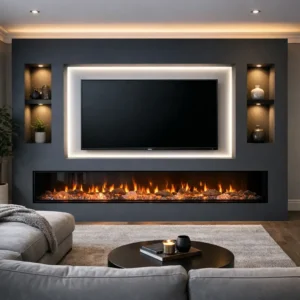
Whether you desire a feature wall with TV for family movie nights or a sleek, minimalist aesthetic for a modern apartment, the options are limitless. The best media wall ideas blend functionality with style, providing storage, warmth, and entertainment in one cohesive unit.
From the initial media wall design consultation to the final installation, planning is key. Consider your equipment size, your budget, and the architectural limitations of your room. With the right approach, a British made media wall can add significant value and enjoyment to your home.
A media wall is a bespoke feature wall designed to house your television, audio equipment, and often an electric fireplace. Unlike a standard TV stand, it is a built-in structure, usually made from a stud frame and plasterboard, that conceals all cables and integrates storage or shelving for a seamless, modern look.
Yes, a media wall is worth the investment for most modern homes. It creates a stunning focal point, hides unsightly wires, and can increase property desirability. It maximises floor space by removing bulky furniture and offers a dedicated solution for heating and entertainment, blending practicality with high-end interior design aesthetics.
The cost varies significantly. A basic DIY build may cost £500 for materials. Professional installation for a standard design typically ranges between £1,500 and £3,000. High-end bespoke media walls UK with luxury finishes, expensive fires, and extensive cabinetry can exceed £5,000. Always get a detailed quote before starting.
It is possible but complex. A media wall with log burner style requires non-combustible building materials (like fire-rated board) and strict adherence to safety regulations regarding distance and ventilation. Most homeowners prefer an electric fire media wall because it is safer, easier to install, and allows the TV to be mounted lower without heat damage risks.
The ideal depth is usually between 30 cm and 40 cm. This depth is sufficient to recess a standard media wall with electric fireplace and accommodate the TV mounting bracket and cables. If you want deep storage cupboards or a curved TV, you may need to increase the depth to 50 cm.


