


Creating a focal point that combines technology with high-end aesthetics has become the gold standard of modern interior design. Many homeowners spend hours scrolling through social media, yet translating those curated images into a functional setup requires a strategic approach. A Pinterest Media Wall is more than just a housing unit for your television; it is a bespoke architectural feature that balances symmetry, lighting, and storage to elevate the entire room’s atmosphere.
The surge in popularity of these integrated units stems from the desire to eliminate visual clutter. In a traditional setup, exposed wires and bulky TV stands often disrupt the flow of a room. By adopting a Pinterest-inspired approach, you can create a seamless transition between your entertainment tech and your home’s decor. These designs often utilize “false walls” built from timber frames and plasterboard, allowing for recessed compartments that house soundbars, gaming consoles, and the TV itself.
When planning your layout, consider the proportions of your wall. A common mistake is choosing a screen size that overwhelms the cabinetry. For a balanced look, ensure there is at least 20 to 30 centimeters of breathing space around the edges of the TV. This “negative space” is what gives the installation its professional, high-end gallery feel.
To move beyond just a pretty picture, your installation must prioritize functionality. Ventilation is a critical factor often overlooked in DIY projects. Electronic devices generate significant heat, and enclosing them in tight spaces can lead to hardware failure.
Cable Management: Use brush plates and internal conduit to keep wires hidden but accessible.
Recessed Lighting: LED strips or spotlights add depth and highlight decorative items.
Storage Solutions: Mix open shelving for decor with closed cabinets for less attractive essentials.
(For deeper insights into this, read our comprehensive guide on [Hidden Ventilation Systems for Home Cinema Units].)
| Feature Type | Best Material | Durability | Technician’s Pro-Advice |
| Main Framework | C16 Grade Timber | High | Use 45mm x 95mm studs to ensure the structure can support the weight of an 85-inch TV without warping over time. |
| External Finish | Moisture Resistant MDF | Medium | Always prime the edges twice; MDF “ends” absorb paint rapidly, leading to an uneven finish if not sealed properly. |
| Decorative Slats | Natural Oak or Walnut | High | Ensure a 10mm gap between slats to allow for natural wood expansion and to create a sharper shadow line. |
The current design landscape is shifting away from stark minimalism toward “warm organic” styles. This involves using textures like Venetian plaster, stone cladding, or wood slats to add character to the Pinterest media wall structure.
One of the most saved images on social media features a long, landscape electric fire positioned directly beneath the TV. This “double feature” setup creates a cozy ambiance. However, safety is paramount. Ensure the heat output of the fire is directed forward rather than upward. You should maintain a minimum clearance of 300mm between the top of the fire and the bottom of the TV niche to prevent overheating the screen’s internal components.
To make a small room feel larger, designers are opting for floating bottom cabinets. By exposing the floor underneath the unit, you create an illusion of more space. This also makes cleaning easier and provides a sleek, contemporary silhouette. If you choose this route, ensure the wall fixings are heavy-duty, as a 2-meter floating cabinet can weigh over 50kg before you even add equipment.
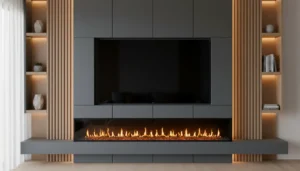
Precision is the difference between a DIY look and a professional finish. When measuring for your Pinterest media wall, you must account for the “depth” of your devices. Most modern slim-line TVs are only 25mm to 40mm deep, but your mounting bracket will add another 20mm.
(Discover more about precision mounting in our latest article: [The Ultimate Guide to TV Bracket Depth and Clearance].)
The depth of the entire false wall usually ranges between 200mm and 350mm. If you plan to include a soundbar, measure its length and height specifically. It is often best to make the soundbar niche 50mm wider than the device itself to allow for hand access when plugging in HDMI or optical cables.
While white and grey remain popular, darker hues like “Anthracite” or “Navy Blue” are trending for media walls. Darker colors help the TV screen “disappear” when it is turned off, preventing the room from being dominated by a large black rectangle. If you choose a dark color, use warm LED lighting (around 2700K to 3000K) to ensure the space doesn’t feel cold or clinical.
| Lighting Type | Placement | Voltage | Technician’s Pro-Advice |
| COB LED Strips | Behind TV / Shelves | 12v or 24v | Use COB (Chip on Board) strips instead of standard SMD strips to eliminate the “dotted” reflection on glossy surfaces. |
| GU10 Downlights | Top Header | 240v | Space these at least 400mm apart to avoid creating “hot spots” of light that distract from the screen. |
The center of the screen should ideally be at eye level when seated, which is typically 105 centimeters from the floor. However, if you are integrating a fireplace, the TV may sit slightly higher. In these cases, use a “tilt” mount to ensure the viewing angle remains comfortable and prevents neck strain during long sessions.
Yes, you can build a unit if you have basic carpentry skills and the right tools. You will need a mitre saw, a drill driver, and a spirit level. However, electrical work for the fireplace and sockets must be signed off by a certified professional to ensure compliance with local building regulations and fire safety.
Cables are hidden by creating a cavity between the original wall and the new timber frame. You should install a “chase” or PVC piping inside the wall. This allows you to fish new cables through in the future without having to tear down the plasterboard, ensuring your setup remains future-proof for new technology.
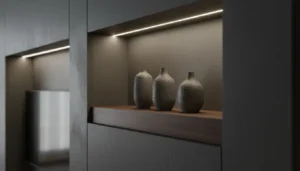
To truly capture the essence of a high-end Pinterest media wall, look for unique textures. Split-face stone tiles behind the TV or mirrored backing in the display niches can add a layer of luxury. If you prefer a more traditional look, adding crown molding to the top of the unit can help it blend into a period property.
Don’t forget the importance of acoustics. If your wall is built from hollow timber, it can sometimes act as a drum, vibrating when the volume is high. Filling the internal cavities with acoustic mineral wool can dampen this effect and improve the overall sound quality of your home cinema experience.
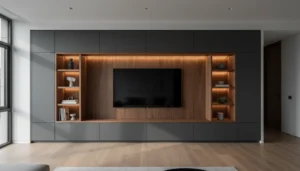
Achieving the perfect home cinema setup requires a blend of aesthetic vision and technical precision. By focusing on correct dimensions, proper ventilation, and strategic lighting, your project will not only look like a curated post but will also serve as a durable, functional heart of your home. Start by sketching your dimensions and choosing a color palette that complements your existing furniture, and soon your living room will be the one providing the inspiration.


